
Indian Army Chief General V K Singh on Thursday said India has no "Cold Start" doctrine as claimed in the secret American documents and dismissed the United States' perception about the Indian Army being "slow and lumbering".

Abbasi was also assertive of Pakistan's nuclear arsenals being safe and secure.
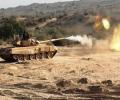
'It is ironic that General Rawat, an infantry officer who the government chose because of his expertise in counter-insurgency, has made his first bold statement in the realm of warfighting and mechanised operations,' points out Colonel Ajai Shukla (retd).

Pakistan army general Ashfaq Parvez Kayani on Friday said the Pakistan is capable of defeating any aggressive design or 'cold start doctrine,' in an apparent reference to Indian army's new military doctrine including scenarios such as a two-front war with China and Pakistan.
Spewing venom against India once again, Pakistan Foreign Minister Shah Mehmood Qureshi has described the Indian Army's 'cold-start doctrine' as an 'irrational' strategy, and said that Islamabad would respond to it 'immediately' and proportionately' if New Delhi acts on that policy.
'Nasr' is a high-precision weapon system with the ability to be deployed quickly, the army said.
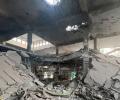
'There's something called deterrence by punishment.' 'That means you hit in a manner calculated to raise costs and consequences for Pakistan, so that the next time it attempts a Pahalgam-like attack, it has to think ten times.'

Pakistan Army Chief General Ashfaq Parvez Kayani has said that the Pakistani forces are fully prepared to give a befitting reply to any 'misadventure' from India.
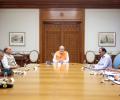
'The government has to explain (to the army, air force and navy chiefs) whether they want a punitive strike, a deep punitive strike, or whether they want limited war or an all-out war, will it be a circumscribed war or will it be a shallow attack along the border.'

Army sources indicate the first Integrated Battle Groups would come up in the plains of Jammu, Punjab, and Rajasthan, providing New Delhi instruments of retaliation in the event of grave provocation by Pakistan, such as a 26/11-style terrorist attack.

Air Chief Marshal said his force is ready for a full spectrum operation but added that any decision on surgical strike involving the IAF has to be taken by the government.

'The necessity of a Mountain Strike Corps is well understood. The problem is in implementing the intention.'

'Defence does not new 'planning commissions'; it needs an implementation commission.'

A proposed nuclear deal aims to stop Pakistan from building small tactical nuclear weapons that could fall into terrorist hands.
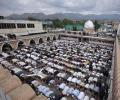
The appointment of General Raheel Sharif as the new army chief of Pakistan has come as a surprise to many. Rajiv Dogra, former ambassador and India's last Consul General to Karachi, speaks to Aabhas Sharma about the appointment, what it says about the priorities of Pakistan Prime Minister Nawaz Sharif and most importantly, what it means for India.

'With two nuclear neighbours, how likely is it for our armed forces to battle in a contaminated environment that could include nuclear, biological or chemical attacks by the adversary?' 'Are we prepared for the threat?' Brigadier S K Chatterji (retd) explains the meaning and significance of Operation Vijay Prahar.
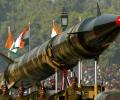
'We have worked to create road blocks in the path of those who thought that there was space for conventional war despite Pakistan's nuclear weapons.' 'Pakistan's nuclear weapons programme is not open-ended and aligned with India only.' 'In this unstable regional environment, one nuclear power is trying to teach lessons to another nuclear power through the medium of small arms and mortar shells on the Line of Control, and bluster.' 'A historic opportunity of a lifetime beckons the leaderships of India and Pakistan to grasp, sit together and explore the possibilities of conflict resolution.'

The Army will hold a month-long war game in the Rajasthan desert along the border with Pakistan to validate its battle concepts including to plug gaps in the night vision capability of its mechanised forces.

The Light Combat Helicopter will enable the army to provide fire support to soldiers at altitudes of 15,000 to 20,000 feet, where the oxygen-depleted air prevents them from carrying weaponry heavier than their personal rifles and light machine guns.

'Absolute non-violence is not only sinful, but immoral.' 'This doctrine of non-violence benumbed the revolutionary fervor, softened the limbs and hearts of the Hindus, and stiffened the bones of enemies.' A revealing excerpt from Vikram Sampath's Savarkar (Part 2): A Contested Legacy, 1924-1966.
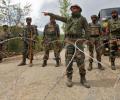
The RSS chief's comment that if war broke out, the military would not be ready for at least six to seven months is correct as it faces a shortfall in training and alertness and an even greater lack of funds for defence preparedness, notes Ajai Shukla.
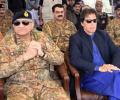
'Any conventional conflict could trigger a nuclear war with results that neither India nor Pakistan could survive easily.' >A revealing excerpt from Shuja Nawaz's The Battle For Pakistan: The Bitter US Friendship And A Tough Neighbourhood.

Pakistan is a "haven" for several Islamist terror groups and successive Pakistani governments are widely believed to have supported some outfits as proxies in the country's conflicts with its neighbours including India, a US Congressional research report has said.

'Diplomatic engagement will continue even as India keeps all its options open with respect to discretely targeting the Pakistani military and its terrorist proxies.'

The CDS has the option to focus on key areas of capability development to fight new generation wars or get bogged down in trying to bring cosmetic changes to humour the political leadership, asserts Brigadier Narender Kumar (retd).

Over the past two decades, six of the eight army chiefs have been from the infantry and the other two from the artillery division. The appointment of either General Bakshi or General Hariz would interrupt the infantry's prolonged domination of the army command, says Ajai Shukla, a retired army officer himself.

Maybe, the need for secrecy may have tied the government's hand from sharing details in Parliament. Still, it should consider the need of sharing the utmost within any consultative committee, so that relative secrecy is still maintained. But such a course should involve the prime minister or home minister, as it is much more serious than is being made out to be, argues N Sathiya Moorthy.
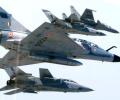
'For Pakistan, the comfortable old calculations and certainties are no longer valid.' 'Strikes on Indian targets now carry a high risk of retaliation and escalation,' notes Ajai Shukla.
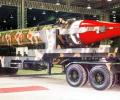
For the world and India, one of the most enduring challenges of the times is for Pakistan's nukes to be neutralised, before they are ever used by the State, their sponsored non-State actors or any rogue elements from the many terror tanzeems dotting Pakistan's unstable landscape, says Lieutenant General Kamal Davar (retd).

India's plan to buy futuristic tanks and infantry combat vehicles -- estimated to be worth Rs 80,000 crore to Rs 100,000 crore each -- will certainly intimidate Pakistan which already feels threatened by our vast tank strength.
.jpg)
Pundits in Pakistan and also some western diplomats are predicting that the next army chief will be forced, partly by institutional pressure and partly by circumstances, to indulge in some tough talking with the civilian leadership. How the civil-military equation settles in this sort of a situation is something that will determine the future of Pakistani politics, and also Pakistan's relations with rest of the world, says Sushant Sareen.
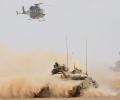
'Offensive operations to capture objectives across the LoC to eliminate terrorist launch pads and deny the use of the most dangerous routes of infiltration, are likely to be limited to brigade-level attacks.' 'These limited operations are unlikely to escalate to war across the international boundary,' says Brigadier Gurmeet Kanwal (retd).

Pakistan is a 'haven' for several Islamist terror groups and successive Pakistani governments are widely believed to have supported some outfits.

'It is crucial today to realise where we have reached in this 15 year-period in order to fully and properly assess the profundity of what General Rawat has said,' points out Ambassador M K Bhadrakumar.
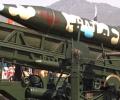
It currently has between 140 and 150 nuclear weapons in its control and stockpiled around 200 to 300 kilogram of plutonium.

'The National Conference and the Peoples Democratic Party, as recent events suggest, are quite content as New Delhi's collaborators rather than trying to be true representatives of the Kashmiri people,' says Athar Parvaiz.

'Until India fully absorbs the fundamentals of international relations, it will continue to get evil for good,' says Brahma Chellaney.

'When it comes to India-Pakistan relations, seminal moments of progress invariably bring out saboteurs of peace -- whether we're talking about fresh provocations along the LoC, or even a terror attack in India.'
